


Honda Maintenance Codes
That little code or light appearing on your Honda’s dashboard isn’t something to ignore until your next fill-up. Your vehicle is communicating with you in real time, and understanding what it means can be the difference between a simple oil change and a costly repair down the road. At Ike Honda, we help Southern Illinois drivers decode these alerts every day. This guide walks you through exactly what the system tracks, what each code means, and what you should do when one appears.
What Is the Honda Maintenance Minder System?
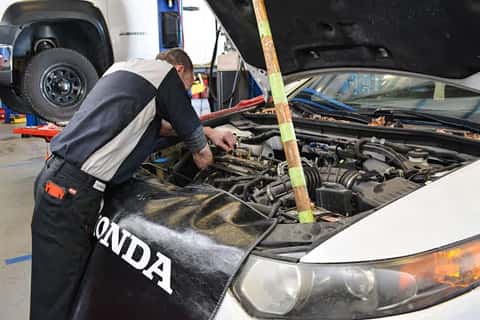
The Honda Maintenance Minder is a built-in feature on newer Honda vehicles designed to take the guesswork out of service scheduling. Rather than relying on outdated sticker reminders or fixed mileage intervals, it uses onboard sensors to track your vehicle’s actual condition and alert you when specific maintenance is genuinely needed.
It monitors multiple performance factors and displays codes directly on the instrument cluster. You won’t over-service your vehicle based on arbitrary schedules, and you won’t unknowingly run it past its maintenance window either. The system prompts action at the right time, which is good for your engine and your wallet.
How the Honda Maintenance Minder Works
The system pulls data from sensors distributed throughout the vehicle. Those sensors measure engine temperature, driving conditions, load patterns, and oil degradation, among other variables. All of that gets processed into personalized maintenance recommendations based on how you actually drive.
This is a real departure from the old “every 3,000 miles” rule of thumb. Someone who drives mostly highway miles at steady speeds will see different maintenance intervals than someone who regularly idles in stop-and-go traffic. The system adapts to both.
Oil Life Percentage: The Heart of the System
The oil life percentage is the central metric the Maintenance Minder tracks. Right after an oil change, it resets to 100%. As you drive, that number gradually decreases based on real-world conditions rather than a simple countdown timer.
When oil life drops to 15%, the system activates to let you know service is coming up soon. At 5%, the alert becomes more urgent, signaling that you should schedule an appointment without delay. At 0%, your oil is overdue. Letting it sit at 0% for any extended period puts real stress on engine components, which is why the system is calibrated to give you advance notice at multiple stages.
How to Read Maintenance Minder Codes on Your Dashboard
The codes display as a combination of a letter and one or more numbers. The letter (A or B) indicates the primary service needed, while the accompanying number or numbers (1 through 7) specify additional tasks that should be completed at the same visit.
A code reading A1 means your Honda needs an oil change plus a tire rotation. A code like B123 signals an oil and filter change with inspection, tire rotation, air-filter service, and transmission fluid replacement, all bundled into one visit. These combinations let the system convey a full picture of your vehicle’s needs in a compact, easy-to-read format. Because exact items vary by model and driving conditions, always confirm what’s due with your owner’s manual or one of our certified Honda service advisors.
Honda Main Service Codes: A and B Explained
The main codes, A and B, form the foundation of the Maintenance Minder. Every maintenance alert begins with one of these two letters, telling you the baseline service your vehicle requires. Sub-codes then expand on that foundation to cover other systems needing attention at the same time.
Code A: Oil Change Service
When Code A appears, your Honda needs an engine oil change. This is the most routine item on the maintenance list, and also one of the most important. Fresh oil keeps engine parts lubricated, reduces heat buildup, and prevents the kind of wear that shortens engine life over time.
Because Code A is based on actual oil degradation rather than a fixed schedule, you can trust that when it appears, the service is genuinely needed. Responding promptly protects your engine and keeps performance where it should be.
Code B: Full Inspection Service
Code B goes further than a simple oil change. It includes an oil and filter replacement alongside a thorough inspection of the brake system, exhaust system, fuel lines, and other fluid-related items. This service helps catch developing issues before they become expensive problems.
When Code B appears, treat the appointment as a full check-in for your vehicle’s health. The inspection component is what gives Code B its value, especially as your Honda accumulates miles and experiences seasonal stress.
Honda Maintenance Minder Sub-Codes 1 Through 7
Sub-codes are the numbers that follow the main letter code. Each one maps to a specific service, appearing when the system determines a particular component or fluid needs attention. They’re the detail layer on top of the broader A or B recommendation.
If you’re due for service and want to check our current service offers before you book, we keep those updated regularly for our Southern Illinois customers.
Sub-Codes 1–3: Tire Rotation, Filters, and Transmission Fluid
Sub-code 1 calls for a tire rotation and a tire pressure-related check, promoting even tread wear and extending tire life. Sub-code 2 flags the need for both an engine air filter and a cabin air filter replacement (also called a dust-and-pollen filter), plus a drive belt inspection. Both filter replacements are included, not just one. Sub-code 3 indicates it’s time to replace the transmission fluid, which is essential for smooth gear operation and protecting the transmission from premature wear.
These three tend to appear more regularly than others and are part of the predictable rhythm of routine Honda maintenance.
Sub-Codes 4–7: Spark Plugs, Coolant, Differential Fluid, and Brake Fluid
Sub-code 4 signals that spark plug replacement is due, along with related inspections such as timing belt (only on models equipped with one), water pump, and valve-clearance checks where applicable. Sub-code 5 covers a coolant replacement, important for preventing overheating and protecting the cooling system from corrosion over time.
Sub-code 6 indicates that rear differential fluid needs replacement, applicable on all-wheel-drive models when equipped. Sub-code 7 calls for a brake fluid replacement. Brake fluid absorbs moisture over time, lowering its boiling point and potentially compromising stopping power. When this code appears, don’t sit on it.
Quick-Reference Guide to Honda Maintenance Minder Codes
| Code | What It Means | Services Involved | Urgency Level |
|---|---|---|---|
| Code A | Oil change due | Engine oil change | Routine |
| Code B | Inspection service due | Oil and filter change, brake system, exhaust, fuel lines, other fluid checks | Address soon |
| Sub-code 1 | Tire service due | Tire rotation and pressure check | Routine |
| Sub-code 2 | Filter and belt service due | Engine air filter, cabin air filter, drive belt inspection | Routine |
| Sub-code 3 | Transmission fluid due | Transmission fluid replacement | Address soon |
| Sub-code 4 | Spark plug service due | Spark plug replacement, timing belt inspection (if equipped), water pump, valve clearance | Address soon |
| Sub-code 5 | Coolant due | Engine coolant replacement | Address soon |
| Sub-code 6 | Differential fluid due | Rear differential fluid replacement (when equipped) | Address soon |
| Sub-code 7 | Brake fluid due | Brake fluid replacement | Do not delay |
What Happens If You Ignore a Honda Maintenance Minder Alert
Dismissing an alert once might seem harmless, but repeated delays compound into real mechanical problems. Degraded oil increases friction between engine components and accelerates wear. Skipping tire rotations creates uneven tread that shortens tire life and affects handling. Neglected brake fluid can compromise stopping performance. Old transmission fluid puts unnecessary strain on internal gears and seals.
There’s also a financial case for staying current. Routine maintenance costs are predictable and manageable. Repairs that follow from prolonged neglect rarely are. The system gives you enough advance notice to plan ahead, so there’s little reason to push past those alerts.
Common Questions About Honda Maintenance Codes
What does it mean when multiple sub-codes appear together? When you see something like B123, three services are due simultaneously alongside the Code B inspection: a tire rotation (sub-code 1), air-filter service (sub-code 2), and transmission fluid replacement (sub-code 3). The system groups these together to reduce the number of separate service trips you need to make.
Can I reset the Maintenance Minder myself? Yes, it can be reset through the instrument cluster. Clearing the alert without performing the service only removes the reminder, it does not address the underlying maintenance need. We recommend having the reset performed by a technician who has confirmed the work is complete, so your oil life percentage and sub-code alerts reflect your vehicle’s actual current condition.
How is this different from a standard check engine light? Maintenance Minder codes relate to scheduled, preventive services. A check engine light signals a system malfunction that needs diagnosis. They’re separate systems, and the presence of one doesn’t affect the other.
Do all Honda models use the same codes? The main codes (A and B) and sub-codes (1 through 7) follow a consistent format across most modern Honda models. Specific intervals and which sub-codes appear may vary depending on the vehicle’s drivetrain and model year. Always confirm with your owner’s manual or a certified Honda service advisor.
What if I’m not sure what a code means when I see it? Contact us directly. One of our service advisors can explain exactly what the code means for your specific vehicle and help you schedule the appropriate service.
Schedule Your Honda Service at Ike Honda
When a maintenance alert appears, our Honda service team is ready to help. We’ve been serving the Southern Illinois area since 1976, and our staff knows the Maintenance Minder system inside and out. Whether your dashboard is showing a simple Code A or a more involved combination like B123, we have the expertise and genuine Honda parts to handle it correctly.
Our service department is open Monday through Friday from 7 AM to 6 PM and Saturday from 7 AM to 12 PM. You can reach us at 618-422-9020 or schedule online. We’re located at 4407 W DeYoung St, Marion, IL 62959.
Staying current with your Maintenance Minder schedule is one of the simplest ways to protect your investment and keep your Honda performing the way it was built to.