


Are Honda Hybrids Worth it in Southern Illinois?
If you’re weighing a Honda hybrid against a gas model for your next vehicle, the honest answer depends less on the badge and more on how you actually drive. Rural highways, hilly terrain around Carbondale, and cold winters all change the math compared to a flat, urban commute. Before you decide, it’s worth browsing our Honda hybrid and electric inventory to see current pricing on the models we’ll discuss here.
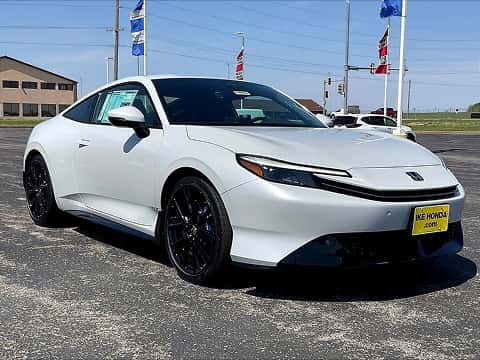
Do Honda Hybrids Make Sense for Southern Illinois Drivers?
Southern Illinois isn’t one driving environment. Marion and Mt. Vernon commuters often deal with a blend of two-lane highways and small-town stop-and-go, while Carbondale residents deal with more concentrated city traffic near campus. Honda hybrids are built to shine in stop-and-go conditions, and that describes a good chunk of daily driving in this region.
For many drivers here, a hybrid makes sense, though the value depends heavily on your specific route and mileage, which we’ll break down section by section below.
Understanding Honda Hybrid Technology: Accord Hybrid and CR-V Hybrid
Honda currently offers hybrid versions of two popular models sold here: the Accord Hybrid and the CR-V Hybrid. Both use Honda’s two-motor hybrid system, mechanically simpler than some competitors’ hybrid setups. There’s also a CR-V TrailSport Hybrid variant for buyers who want more rugged styling without giving up hybrid efficiency.
How the Hybrid Powertrain Works
The Accord Hybrid pairs a 2.0-liter Atkinson-cycle four-cylinder engine with the two-motor system for a combined 204 hp. The CR-V Hybrid uses a similarly sized 2.0-liter naturally aspirated four-cylinder plus two electric motors, producing the same 204-hp combined system output and up to 247 lb-ft of torque from its electric motor, more torque than the gas-only CR-V offers.
Power routes through a single-speed clutch-lockup transmission rather than a traditional automatic. Regenerative braking captures energy every time you slow down, feeding the battery instead of wasting that energy as heat. Both systems perform best in stop-and-go city driving rather than steady highway cruising.
EPA Fuel Economy Estimates by Model
The 2026 Accord Hybrid EX-L Hybrid is rated at up to 51 city / 44 highway / 48 combined MPG (EPA-estimated), while the Sport, Sport-L, and Touring Hybrid trims come in at 46 city / 41 highway / 44 combined (EPA-estimated). Compare that to the non-hybrid Accord LX at 29/37/32 or the SE at 28/36/31, and the hybrid’s city advantage is substantial.
For the CR-V Hybrid, the numbers with Real Time AWD land at 40 city / 34 highway (EPA-estimated), while the FWD version reaches 43/36 (EPA-estimated). The CR-V TrailSport Hybrid comes in at 38 city / 33 highway / 35 combined (EPA-estimated). The non-hybrid turbo CR-V, by comparison, is rated at 28/33 with FWD (27/31 with AWD). For city-heavy drivers, the CR-V hybrid vs. gas comparison clearly favors the hybrid on fuel economy alone.
Matching Hybrid Value to Your Driving Habits
Specs only tell part of the story. Your actual routes determine whether that fuel economy advantage translates into real savings.
City and Stop-and-Go Driving Around Southern Illinois
Drivers doing frequent short trips, errands around Marion or Herrin, or stop-and-go commuting into Carbondale fit this setup best. The two-motor system earns its keep here, using electric power at low speeds and capturing braking energy that would otherwise be lost. If your daily miles look more like errands than open road, this is likely your profile.
Highway Commutes and Long-Distance Travel
Drivers who log significant highway miles, particularly at higher speeds or through hillier terrain near Shawnee National Forest, fit a different profile. Highway driving relies more on the gas engine, since there’s less opportunity for regenerative braking. City-heavy Accord Hybrid drivers may approach 50 mpg, but heavy-footed driving, sustained speeds above 70 mph, or hilly highway stretches will land closer to or below the roughly 42 mpg highway rating (real-world). That’s still efficient, but the gap between hybrid and gas narrows the faster and farther you drive.
Cost Considerations: Hybrid vs. Gas Honda Models
Here’s the money side, and it’s usually where the decision actually gets made.
Price Differences Between Hybrid and Gas Trims
The 2026 Accord lineup starts with the LX at an MSRP of $28,395 and the SE at $30,695 for gas trims, while hybrid trims start with the Sport Hybrid at $33,795, moving up through the EX-L Hybrid at $35,095, Sport-L Hybrid at $35,495, and Touring Hybrid at $39,495. Hybrid technology generally adds somewhere between $3,000 and $12,000 depending on the model and trim, though exact figures vary.
For the CR-V hybrid vs. gas comparison, the CR-V Hybrid trims start at a higher, well-equipped trim level, so you’re often comparing a more feature-rich starting point rather than an apples-to-apples base model.
Local Fuel Prices and Long-Term Ownership Costs
Illinois fuel prices have historically run higher than the national average, with GasBuddy and AAA data showing Illinois averaging roughly $4.32 to $4.34 per gallon compared to about $4.10 nationally, a gap of around 25 cents. That regional premium matters for the math: the more you drive, and the higher local gas prices climb, the more a hybrid’s efficiency advantage compounds over time.
A simple way to think about it: if your annual highway mileage is high and your routes stay relatively flat, the fuel savings from a hybrid may offset the upfront price premium over several years of ownership. If your mileage is modest or heavily rural-highway at higher speeds, that break-even point stretches out and may not arrive during a typical ownership period. This is exactly the kind of calculation our team can walk through with you, and it’s worth reviewing current financing options or applying for preapproval before you commit either way.
Seasonal Driving and Maintenance Expectations in Southern Illinois
Plenty of skeptical shoppers have real questions about how these systems handle winter.
Hybrid Battery Coverage and Reliability
Honda backs the hybrid powertrain with an 8-year/100,000-mile warranty. Gradual capacity loss over time is expected and not covered, but greater-than-normal degradation is covered under that warranty. In practice, these batteries have shown a lifespan of 12 to 15 years, though individual results vary.
On cold-weather concerns specific to our winters, the system is engineered for extreme temperatures, with the gas engine assisting the electric motors during sub-zero startups. Expect a more pronounced dip in MPG during winter months than in a gas-only vehicle. DOE testing shows hybrids can see roughly a 30% fuel-economy drop in cold temperatures, compared to about 15% for conventional gas vehicles, while thermal management works to protect long-term battery health.
Routine Maintenance for Hybrid vs. Gas Models
Maintenance is more similar than different. Oil changes still happen every 5,000 to 7,000 miles, and regenerative braking tends to extend brake life since the electric motors handle more of the slowing-down work. Ownership costs, including fuel, maintenance, insurance, and depreciation, vary based on your driving habits and financing terms; Kelley Blue Book’s cost-to-own tools can provide a personalized estimate for your specific situation.
Every new Honda from Ike Honda includes Honda Service Pass, which covers complimentary scheduled maintenance for 12 months or 12,000 miles on MY2025 and newer vehicles (up to two years or 24,000 miles on select MY2023-2024 models), and Maintenance Minder keeps you informed of what’s due. If you ever have questions about service intervals, our service team is easy to reach.
When a Gas-Powered Honda May Be the Better Fit
Hybrids aren’t the automatic answer for everyone. Real-world fuel-economy gaps between hybrid and gas models can be smaller than EPA ratings suggest, and in some performance-oriented tuning scenarios, the overall gain may be as little as 2 mpg. Hybrids can also cost more to insure and, as a general trend with no guarantees, may depreciate somewhat faster than comparable gas models.
For cargo-focused buyers, this matters concretely: the CR-V Hybrid tops out at 71.8 cubic feet of cargo space (Sport and Sport-L trims) versus 76.5 cubic feet in the gas CR-V. If you haul gear, tow trailers, or need every inch of cargo room, the gas CR-V’s higher cargo capacity and stronger towing capacity may be the smarter fit. Buyers with minimal daily mileage or a tight upfront budget may also find the lower MSRP of a gas trim more practical, since the fuel savings take longer to accumulate at lower mileage.
Financing, Trade-In, and Ownership Support at Ike Honda
Whichever powertrain fits your life, the financial side doesn’t have to be complicated. Our finance team works through preapproval and current specials so you know your numbers before you commit. If you’re trading in an existing vehicle, you can get a value estimate through our trade-in appraisal tool ahead of your visit, which helps clarify your real out-the-door cost on either a hybrid or gas model. We keep this process transparent because we’d rather you make a confident decision than a rushed one.
Compare Both Powertrains at Ike Honda
See What’s Available
There’s no substitute for sitting in both vehicles and feeling how each drives on the same roads you’ll use every day. We encourage shoppers to browse our 2026 Honda hybrid and EV models for a closer look at what’s currently available, then bring your questions to our team in person. Our sales hours run Monday through Friday, 8 AM to 6 PM, and Saturday from 8:30 AM to 5 PM, making it easy to plan a visit around your schedule.
Let’s Find Your Fit
We believe you don’t have the right price until you’ve had Ike’s price. It’s how we approach every conversation, whether you’re set on a hybrid, leaning gas, or still deciding. Stop by our Marion location or contact us online, and let’s figure out together which Honda actually fits how you drive.
0 comment(s) so far on Are Honda Hybrids Worth it in Southern Illinois?