


Honda Sensing Features & Technology
If you’ve shopped for a Honda recently, you’ve probably heard the term “Honda Sensing” mentioned. But what exactly does it mean, and how does it change your daily driving experience? At Ike Honda, we help Southern Illinois drivers understand these technologies every day, and we’re here to explain them in plain language. Visit us to explore our new Honda inventory and experience these features firsthand.
What Is Honda Sensing? Honda’s Driver-Assist Technology Explained
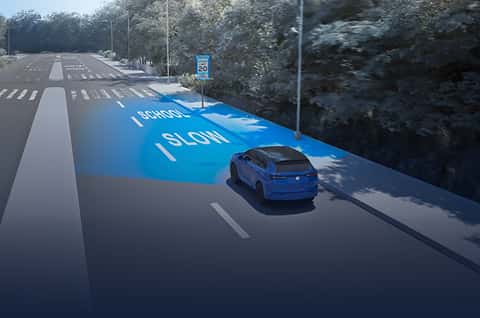
Honda Sensing is Honda’s comprehensive suite of driver-assist technologies that work together to make driving safer and less stressful. The system uses a combination of a monocular camera mounted at the top of the windshield behind the rearview mirror and a millimeter-wave radar unit mounted behind the front grille to scan for vehicles, lanes, signage, and hazards.
Select newer models, such as the current-generation Civic, use an updated single-camera system with a wider field of detection and a more powerful processor that achieves the same core functionality.
What makes this technology special is how naturally it integrates into your regular driving routine. You’re still in control, but the system acts as a vigilant co-pilot. When you’re maintaining your lane on the highway, checking your blind spot, or managing your speed in traffic, Honda Sensing quietly monitors these same factors and provides backup support.
Most new Honda vehicles now include Honda Sensing as standard equipment rather than an expensive add-on. The CR-V, Accord, Civic, Pilot, and other models in our lineup all come equipped with this safety suite, making advanced safety features accessible across different price points.
Core Honda Sensing Features in Plain Language
Understanding what’s included in the Honda Sensing suite helps you appreciate how each feature contributes to safer driving. The system isn’t just one technology but several specialized features working together.
Collision Prevention: CMBS and Forward Collision Warning
The Collision Mitigation Braking System (CMBS) serves as your primary defense against front-end collisions. This feature constantly measures the distance between your vehicle and the car ahead, calculating whether a collision might occur based on your current speed and trajectory.
When CMBS detects an imminent collision, it provides visual and auditory warnings through the Forward Collision Warning feature. If you don’t respond quickly enough, CMBS can automatically apply the brakes with enough force to avoid the collision entirely or significantly reduce impact severity. This automated braking happens faster than most human reaction times.
The system works at various speeds, from slow-moving traffic to highway cruising. Whether someone suddenly stops short or a pedestrian steps into the roadway, CMBS monitors these scenarios continuously.
Lane Safety: Lane Keeping Assist and Road Departure Mitigation
Lane Keeping Assist System (LKAS) uses the camera to identify painted lane markings on the road surface. Once it recognizes these lines, the system provides gentle steering corrections to help you stay centered in your lane. You’ll feel subtle resistance through the steering wheel, almost as if the car is nudging you back toward the middle of your lane.
Road Departure Mitigation focuses on more serious lane departure situations. If the system detects you’re about to leave the roadway entirely, it can apply steering torque, braking, or both to help guide you back to safety. This proves especially valuable on long highway drives when fatigue might cause momentary inattention.
Adaptive Cruise Control and Traffic Sign Recognition
Adaptive Cruise Control transforms traditional cruise control from a fixed-speed system into an intelligent speed management tool. Set your desired maximum speed, and the system maintains a preset following distance from vehicles ahead. When traffic slows, your Honda automatically reduces speed. When the road clears, the vehicle accelerates back to your chosen speed. You can choose from four following intervals, ranging from short to extra-long, to match your preference and comfort level in traffic.
The low-speed follow feature makes stop-and-go traffic significantly less taxing. The system can bring your vehicle to a complete stop behind the car ahead and resume movement when traffic flows again.
Traffic Sign Recognition uses the camera to read road signs. When you pass a speed limit sign, the system displays the current limit on your dashboard, keeping you informed without requiring constant visual scanning of roadside signage.
Lead Car Departure Notification
This simple but practical feature alerts you when the vehicle ahead moves forward after stopping, preventing those awkward moments when traffic resumes but you haven’t noticed yet.
What Honda Sensing Feels Like Behind the Wheel
We invite you to check out our current Honda specials and schedule a test drive to experience these features yourself. Reading about them provides understanding, but feeling them in action reveals how the technology changes your driving experience.
Highway Commuting and Long Road Trips
Highway driving with Honda Sensing enabled feels markedly more relaxed. Engage Adaptive Cruise Control, and those constant micro-adjustments you normally make to maintain speed and following distance largely disappear. Lane Keeping Assist subtly guides you through gentle curves and helps counter crosswinds that might pull your vehicle toward one side.
On multi-hour road trips, these features measurably reduce fatigue. Your concentration remains important, but the mental load decreases when you’re not constantly modulating speed and making tiny steering corrections. Many Southern Illinois drivers traveling to St. Louis or beyond report arriving at distant destinations feeling less exhausted.
Stop-and-Go Traffic and City Driving
In stop-and-go traffic, the low-speed Adaptive Cruise Control function manages the tedious acceleration and braking cycle that normally makes congested driving tiring. The system smoothly stops behind other vehicles and resumes motion when they move forward.
Forward Collision Warning proves particularly valuable in city environments where sudden stops occur frequently. Pedestrians stepping between parked cars, vehicles emerging from side streets, or brake lights suddenly illuminating ahead all trigger appropriate alerts when necessary.
Setting the Right Expectations for Honda Sensing
What Honda Sensing Cannot Do
Understanding Honda Sensing’s capabilities matters, but recognizing its limitations proves equally important. The technology assists capable drivers rather than replacing human judgment and attention. This is not autonomous driving technology.
The system cannot navigate complex intersections, handle unprotected turns, or make judgment calls about yielding to other traffic. You must remain actively engaged in driving, with hands on the wheel and eyes on the road.
Honda Sensing serves as an additional safety layer, not a substitute for attentive driving. It requires constant driver attention and does not replace your assessment of traffic conditions. The system may not detect all objects, pedestrians, or unusual scenarios.
Weather, Road Conditions, and System Alerts
Weather conditions and environmental factors can limit effectiveness. Heavy rain, snow, or fog may reduce sensor and camera range. Direct sunlight or darkness can affect camera performance. Road construction zones with temporary or missing lane markings challenge the lane-keeping features.
Keep your windshield clean and avoid over-relying on the system in adverse weather. The system will alert you when conditions prevent reliable operation.
Currently, Honda Sensing requires your hands to remain on the steering wheel at all times. This design philosophy emphasizes that driver-assist technology supports active drivers rather than enabling passive vehicle operation.
How to Use Honda Sensing: Adjusting Settings and Controls
Most Honda Sensing features can be activated or adjusted through the vehicle’s multi-information display, accessed via buttons on the steering wheel. The Honda Sensing button, typically located on the steering wheel, provides quick access to key functions.
Adaptive Cruise Control activates through dedicated steering wheel buttons similar to conventional cruise control. You’ll find buttons to set speed, adjust following distance, and resume or cancel the system. Following distance offers several settings, allowing you to choose spacing that matches your comfort level.
Lane Keeping Assist sensitivity can often be adjusted to provide more or less steering assistance. Traffic Sign Recognition usually operates automatically, though you can typically disable it through the settings menu if desired.
Keep the camera behind the rearview mirror and radar units in the front grille clean for optimal performance. Remove snow, ice, dirt, or debris that accumulates during winter weather.
When Honda Sensing Sensors May Be Limited
Weather and Temperature Effects on Honda Sensing
Knowing when environmental conditions might affect Honda Sensing helps you prepare to take over full manual control when necessary. The system monitors its own effectiveness and will provide alerts when sensors cannot function reliably.
Severe weather represents the most common limitation. Heavy precipitation can obscure the camera behind the windshield. The radar sensors prove more weather-resistant but face reduced effectiveness in heavy snow or when covered with road spray and slush. Fog creates similar challenges by reducing visibility range.
Road Conditions and System Alerts
Extreme temperatures affect sensor performance. Very cold weather can cause sensors to take longer to activate. Direct sunlight shining into the windshield-mounted camera may temporarily affect image quality.
Road conditions play a role as well. Faded, missing, or unconventional lane markings confuse the lane-keeping features. Construction zones with temporary lane configurations or areas where pavement and lane lines are similar colors challenge the system.
The system typically provides clear dashboard alerts when conditions prevent reliable operation, reminding you to take full manual control.
Experience Honda Sensing at Ike Honda
Reading about Honda Sensing provides valuable information, but nothing compares to experiencing the technology during an actual test drive. We invite you to visit our Marion, Illinois dealership to see how these features work in real driving situations.
At Ike Honda, our team can demonstrate each feature, explain how controls work, and answer specific questions about how Honda Sensing adapts to your typical driving routes. As a family-owned dealership serving Southern Illinois since 1976, we’ve built our reputation on helping customers understand and benefit from Honda’s latest technologies.
Schedule Your Test Drive Today
We maintain a comprehensive inventory of new Honda models with Honda Sensing, along with used and certified pre-owned options. Whether you’re interested in a CR-V for family transportation, an Accord for commuting, or a Pilot for versatility, we can arrange test drives that showcase how each model’s features perform.
Located at 4407 W DeYoung St in Marion, we’re open Monday through Friday from 8 AM to 6 PM and Saturdays from 8:30 AM to 5 PM. Beyond initial purchase, our on-site service department offers maintenance and support for Honda Sensing systems, ensuring your safety features continue operating reliably.
Contact us at 618-422-9020 or visit our contact page to schedule a consultation. Experiencing Honda Sensing during a test drive helps you understand exactly how these features will enhance your daily driving safety and convenience. Browse our Honda lineup today and discover how Honda Sensing can make every drive safer and more enjoyable.
1 comment(s) so far on Honda Sensing Features & Technology
Thanks for breaking down Honda Sensing—it’s great to see how these safety features are becoming more accessible across different models. I especially appreciate how the system helps with lane keeping and adaptive cruise control, which really adds peace of mind during long drives. It’s reassuring to know that Honda is prioritizing driver assistance without compromising on usability.