


Standard & Optional Honda Safety Features
Shopping for a new Honda means navigating safety features that range from standard equipment to trim-dependent upgrades. We’ve put together this guide to clarify exactly what you’ll find on every 2026 Honda versus what requires a higher trim level. Our team at Ike Honda works with Southern Illinois families daily to match their safety priorities with the right vehicle configuration. When you explore our new Honda inventory, understanding these distinctions helps you make confident decisions.
Here’s the good news: Honda has made its most advanced active safety technology standard across all trims of the 2026 CR-V, Accord, and Pilot. This shift means even base models deliver sophisticated collision prevention systems that were optional upgrades just a few years ago. Let’s break down what comes standard, what requires trim upgrades, and how to verify features on specific vehicles you’re considering.
Understanding Passive vs. Active Safety in 2026 Honda Vehicles
Honda safety features fall into two categories that work together to protect you. Passive safety features protect occupants during a collision. These include the structural body design, airbag systems, and energy-absorbing components that activate only when an accident occurs. Think of them as your last line of defense.
Active safety features help prevent accidents from happening in the first place. These systems constantly monitor your surroundings and either alert you to hazards or intervene to avoid collisions. Honda Sensing® represents the brand’s active safety suite, using cameras and sensors to provide assistance before trouble occurs.
The distinction matters because both types contribute to overall vehicle safety ratings from IIHS and NHTSA. Passive features establish a foundation of crash protection, while active features reduce the likelihood you’ll need that protection. Understanding this difference helps you evaluate whether optional active safety upgrades justify their cost for your driving patterns.
Standard Honda Sensing Features on 2026 Models
Honda Sensing comes standard on every 2026 CR-V, Accord, and Pilot, regardless of trim level. This represents significant value compared to competitors who tier these features across price points. The standard suite includes core technologies that actively assist drivers in avoiding collisions and maintaining safe vehicle control.
These features operate using a forward-facing camera mounted behind the rearview mirror and radar sensors integrated into the front grille. The systems work together to monitor traffic patterns, road markings, and potential obstacles. They provide visual and audible alerts, and in some situations, the vehicle takes corrective action.
Automatic Emergency Braking and Forward Collision Warning
The Collision Mitigation Braking System™ (CMBS™) with Pedestrian Detection watches the road ahead for potential impacts. If the system detects an imminent collision with another vehicle or pedestrian and you don’t respond to warnings, it applies the brakes automatically to reduce impact severity or avoid the collision entirely.
Forward Collision Warning provides the initial alert before automatic braking engages. Visual and audible warnings give you a chance to brake or steer away from danger. This two-stage system balances driver control with emergency intervention when needed.
Lane Keeping Assist and Lane Departure Alerts
Lane Keeping Assist System (LKAS) helps maintain your position within lane markings on the highway. The system provides gentle steering assistance to keep you centered. If you drift toward lane markings without signaling, you’ll feel corrective steering input.
Road Departure Mitigation (RDM) with Lane Departure Warning goes further by detecting when you’re about to leave the roadway entirely. The system can apply steering torque and braking force to help you stay on the pavement. These features reduce accidents caused by distraction or drowsiness, particularly on long highway drives.
Adaptive Cruise Control with Low-Speed Follow
Adaptive Cruise Control (ACC) maintains a set following distance from vehicles ahead rather than just a fixed speed. The system automatically slows down when traffic ahead decelerates and speeds back up when the road clears. This reduces the constant acceleration and braking required in moderate traffic.
Low-Speed Follow extends this capability down to complete stops. In stop-and-go traffic, the system can bring your Honda to a complete stop and resume when traffic moves again. This feature transforms stressful commutes into more relaxed driving experiences.
Structural and Passive Safety Features That Come Standard
Every 2026 Honda includes Advanced Compatibility Engineering™ (ACE™) body structure as its foundation. This design uses strategically placed crumple zones and reinforcement channels to distribute crash energy away from the passenger compartment. The structure works for both front and side impacts.
The airbag system includes advanced front airbags for driver and passenger, front side airbags, knee airbags, outboard rear side airbags, and side curtain airbags with rollover sensors. This multi-layer protection addresses various collision scenarios. The supplemental restraint system (SRS) calibrates deployment based on crash severity and occupant position.
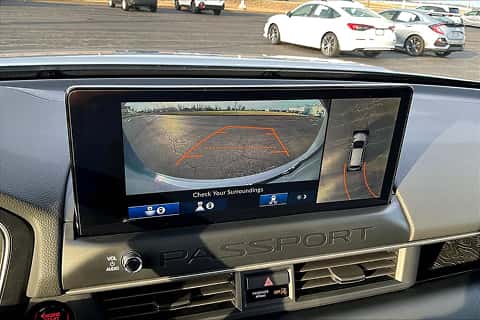
Standard passive features also include LATCH anchors for child safety seats, child-proof rear door locks, and a multi-angle rearview camera. These components work silently in the background until needed, providing fundamental protection regardless of your chosen trim level.
Optional and Trim-Dependent Safety Features Worth Considering
Beyond standard Honda Sensing features, several advanced technologies require specific trim levels. These additions enhance awareness in situations where standard sensors have limited visibility. Whether they justify the upgrade cost depends on your driving environment and personal priorities.
Here’s a breakdown of key optional safety feature availability across three popular Honda models:
| Safety Feature | CR-V | Accord | Pilot |
| Blind Spot Information System | EX and above | SE and above | Standard on all trims |
| Cross Traffic Monitor | EX and above | SE and above | Standard on all trims |
| Parking Sensors | EX-L and above | EX-L Hybrid and Touring Hybrid | EX-L and above |
| Traffic Sign Recognition | Available | Standard on all trims | Available |
| 360° Camera | Touring and Elite | Higher trims | Touring and Elite |
Understanding these tier requirements helps you compare current Honda specials across trim levels to find the best value for your needed features.
Blind Spot Information System and Cross Traffic Monitor
The Blind Spot Information (BSI) System monitors areas alongside your vehicle that mirrors don’t fully cover. When a vehicle enters your blind spot, an indicator illuminates in the corresponding mirror. If you signal to change lanes while a vehicle occupies that space, the indicator flashes and an alert sounds.
Cross Traffic Monitor works similarly when backing out of parking spaces. The system detects approaching vehicles from either side and provides visual and audible warnings. These features prove particularly valuable in urban parking lots and highway merging situations common throughout Southern Illinois.
For the Accord, BSI and Cross Traffic Monitor come standard starting with the SE trim. The CR-V requires the EX trim or higher for these features, while the Pilot includes them as standard equipment on all trims.
Parking Sensors, 360° Camera, and Advanced Headlights
Parking sensors detect obstacles around your vehicle during low-speed maneuvers. Front and rear sensors provide increasingly urgent alerts as you approach objects. The Pilot offers these starting at the EX-L trim, while CR-V and Accord include them on higher trim levels.
The 360° camera system stitches together multiple camera views to create an overhead perspective of your vehicle’s surroundings. This bird’s-eye view eliminates blind spots when parking in tight spaces. You’ll find this feature on Touring and Elite trims of the CR-V and Pilot.
Auto high-beam headlights detect oncoming traffic and automatically switch between high and low beams. This convenience feature comes as part of the Honda Sensing suite. Traffic Sign Recognition, which displays detected speed limit and other road signs on your instrument cluster, is standard on the Accord but requires specific trims on other models.
How to Verify Safety Features on a Specific Honda
Before purchasing, confirm exactly which safety features your selected vehicle includes. Three methods provide reliable verification. Start with the window sticker (officially called the Monroney label). Federal law requires this comprehensive list on all new vehicles. The sticker details every installed feature, including safety technologies.
Request the build sheet from our team. This factory document shows original equipment as configured during manufacturing. It provides specifications beyond what appears on window stickers and confirms that optional packages were properly installed.
Finally, experience the features during your test drive. Honda Sensing systems activate on the road, allowing you to feel how lane-keeping assistance works and see forward collision warnings in action. Verify that optional equipment like BSI and parking sensors function as expected.
We encourage thorough verification because trim packages sometimes include features not immediately obvious. A systematic check prevents misunderstandings and ensures you receive exactly what you’re paying for. Considering whether to lease or buy your Honda becomes easier once you’ve confirmed which safety equipment each trim delivers.
Find the Right Honda Sensing Configuration at Ike Honda
Matching Safety Features to Your Trim and Budget
Safety feature availability varies across trim levels in ways that affect your budget and protection. Our team helps Southern Illinois shoppers navigate these differences daily. We maintain detailed specifications for every 2026 model and can quickly identify which trims include your priority features.
Start by listing safety technologies most important for your driving situation. Highway commuters prioritize adaptive cruise control and lane-keeping assistance (both standard across all trims). City drivers often value parking sensors and 360° cameras, which require specific upgrades. Families with new drivers might emphasize BSI and rear cross-traffic alerts.
Compare the incremental cost between trim levels against the value of added features. Sometimes the next trim up includes safety equipment plus other amenities that justify the price difference. Other times, base models with standard Honda Sensing provide everything you need without optional upgrades.
Schedule a Safety Feature Demonstration
Visit us at 4407 W DeYoung St in Marion to experience these technologies firsthand. Our sales team demonstrates how each system operates and explains the practical differences between standard and optional equipment. You can browse our 2026 Honda models online first to identify vehicles matching your criteria.
Contact our team at 618-422-9020 to schedule a comprehensive safety feature demonstration. We’ll walk through standard Honda Sensing capabilities, show you trim-dependent options, and help match your safety priorities with the right vehicle configuration.
0 comment(s) so far on Standard & Optional Honda Safety Features