


2026 Honda Pilot vs 2026 Toyota Highlander
Shopping for a three-row SUV? You’re probably looking at the Honda Pilot and Toyota Highlander. Both have ruled this space for years, but they couldn’t be more different in their approach. The Pilot goes big on space and capability, while the Highlander focuses on efficiency and urban-friendly dimensions.
We’ve spent time with both vehicles, and here’s what matters when you’re hauling kids, gear, and everything else family life throws at you.
2026 Honda Pilot vs. 2026 Toyota Highlander: At a Glance
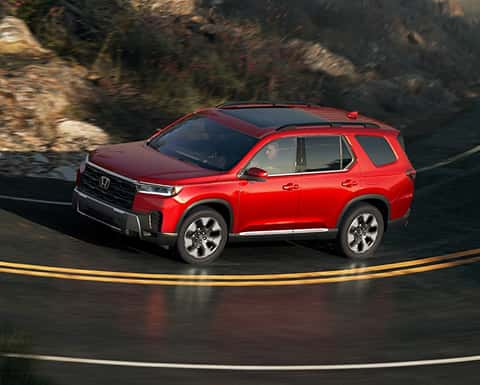
The design language tells the story. Honda built the Pilot to look tough and ready for adventure. Toyota crafted the Highlander for sophistication, with sleek lines that work equally well at school pickup and downtown meetings.
The specs reveal their different priorities:
| Category | 2026 Honda Pilot | 2026 Toyota Highlander |
| Engine | 3.5L V6, 285 hp, 262 lb-ft torque | 2.4L Turbo I-4, 265 hp, 310 lb-ft torque |
| Transmission | 10-speed automatic | 8-speed automatic |
| Fuel Economy (city/hwy) | 19/27 mpg (FWD); 19/25 (AWD); 18/23 (TrailSport) | 21/28 mpg (AWD); Hybrid: 35 combined |
| Towing Capacity | 3,500 lbs (2WD); 5,000 lbs (AWD) | 5,000 lbs (AWD) / 3,500 lbs (Hybrid) |
| Max Cargo (behind 3rd row / all seats folded) | 18.6 / 111.8 cu ft | 16.0 / 84.3 cu ft |
| Third-Row Legroom | 32.5 inches | 28 inches |
One prioritizes maximum space. The other balances room with impressive fuel efficiency. Both nail the safety basics and tech features families expect.
Want to see how the Pilot feels in person? Explore the 2026 Honda Pilot at our dealership.
Engine Performance and Towing Capability
The Pilot’s naturally aspirated V6 feels instantly responsive. No waiting for turbos to spool up, just immediate power when you need to merge or pass. That 10-speed transmission keeps everything smooth during daily drives while holding plenty in reserve for highway hills or loaded cargo runs.
Toyota offers more variety. The turbocharged four-cylinder delivers strong low-end grunt with 310 lb-ft of torque. But the hybrid gets interesting, combining gas and electric power for seriously impressive fuel economy without sacrificing everyday drivability. The electric motors handle city driving beautifully, making traffic jams less painful.
Powertrain Options and Real-World Power
Here’s where your driving habits matter. The Pilot’s V6 never leaves you guessing about power delivery. Highway onramps? No problem. Hills with a full load? Handled easily. It’s the kind of confident performance that makes family road trips less stressful.
The Highlander hybrid takes a completely different approach. Around town, those electric motors do most of the work, keeping things quiet and efficient. Highway performance stays solid, though you’ll notice it’s not quite as eager as the Pilot when you really need to move.
If you spend most of your time in stop-and-go traffic, the hybrid makes sense. Highway families might prefer the V6’s straightforward power.
Towing Capacity for Family Adventures
This is where the Pilot shows its utility focus. Even the 2WD version handles 3,500 lbs, perfect for smaller trailers or boats. Step up to AWD and you get 5,000 lbs of capacity. That flexibility matters if you occasionally need to tow but don’t want to pay for AWD year-round.
The Highlander matches that 5,000-lb capacity with AWD. If your family regularly tows campers or boats, both work well. The difference comes down to whether you want that 2WD towing option the Pilot offers.
Fuel Economy: Which SUV Costs Less to Drive?
No contest here. The Highlander hybrid achieves 35 mpg combined, which can save you serious money over several years of ownership. City driving showcases the strength of that hybrid system, with electric motors handling most low-speed work.
The Pilot manages 19/27 mpg with front-wheel drive and 19/25 with AWD. Respectable for a V6, but the hybrid beats it handily. Highway driving narrows the gap somewhat, but city commuters will notice the difference at every gas station.
Do the math based on your actual driving. If you’re putting 15,000 miles per year on mostly city streets, the hybrid’s savings add up quickly. Mostly highway families find the efficiency difference less dramatic.
Interior Space and Passenger Comfort
Here’s where the Pilot flexes. With 18.6 cubic feet behind the third row and up to 111.8 cubic feet with all seats folded, it beats the Highlander’s 16.0 cubic feet behind the third row and 84.3 cubic feet maximum. You feel that difference when everyone’s bags fit behind the third row, or when you’re loading camping gear without playing Tetris.
The Pilot’s third row actually works for adults on longer trips. With 32.5 inches of legroom, teenagers won’t complain as much. The Highlander gives third-row passengers 28 inches, which feels tight for anyone over average height. Kids fit fine, but adults might feel cramped.
Both nail second-row comfort with space for car seats and growing kids. Climate control keeps everyone happy, and material quality feels premium where it counts.
Three-Row Seating Comfort and Accessibility
Getting to that third row matters when you use it regularly. The Pilot makes this easy with second-row seats that slide and fold smoothly. Wide door openings help when you’re dealing with kids, grandparents, or anyone who needs extra space to get in and out.
The Highlander’s third-row access works but requires more effort. Consider how often you’ll actually put people back there. If it’s mostly for emergencies or short trips, the Highlander’s setup suffices. Daily third-row use? The Pilot’s extra legroom and easier access pay off.
Cargo Capacity and Everyday Versatility
That cargo advantage shows up in real life. With 18.6 cubic feet behind the third row versus the Highlander’s 16.0 cubic feet, the Pilot handles grocery runs and sports equipment without forcing you to fold seats. Its squared-off cargo area makes loading easier too.
The Highlander requires more strategic packing when all seats are up. Fold that third row and both vehicles open up significantly, with the Highlander reaching 57.9 cubic feet and the Pilot reaching comparable territory. Fold both rear rows and the gap widens again, with the Pilot topping out around 111.8 cubic feet against the Highlander’s 84.3 cubic feet. Hidden storage compartments in both help organize the chaos of family gear.
Technology, Infotainment, and Interior Quality
Both deliver solid tech experiences. The Pilot’s interface feels more intuitive, with menu layouts that make sense without constantly checking the manual. Apple CarPlay and Android Auto work smoothly in both.
Interior quality meets expectations from both brands. Soft-touch materials appear where they should, and build quality stays consistently high. The Pilot sometimes edges ahead in material selection, but you’re splitting hairs at this level.
Safety Features and Driver-Assistance Systems
Honda Sensing comes standard on the Pilot, bundling adaptive cruise control, lane-keeping assist, and automatic emergency braking. These systems work well together, reducing fatigue on long drives while providing important safety nets.
Toyota Safety Sense 2.5+ equips the Highlander with similar capabilities. Both vehicles earn strong crash test ratings from NHTSA and IIHS. Blind-spot monitoring and rear cross-traffic alert help in crowded parking lots where kids and shopping carts appear without warning.
Pricing, Trims, and Overall Value
Value goes beyond the sticker price. The Pilot often includes more standard equipment at entry-level trims. The Sport trim starts around $42,195 compared to the Highlander XLE at approximately $45,570. This approach helps budget-conscious families get modern amenities without premium pricing.
The Highlander sometimes requires higher trims to match the Pilot’s standard features. However, that hybrid powertrain’s fuel savings can offset higher upfront costs for families who drive extensively. Both hold their value well in the resale market.
At Ike Honda, we help Southern Illinois families navigate these decisions. Our team explains trim differences and arranges test drives that fit your schedule. Check out our financing options and current new vehicle specials for potential savings.
Which Family SUV Should You Choose?
The Pilot works best for families who need maximum space and capability. Its cargo advantage grows significantly when both rear rows are folded, reaching around 111.8 cubic feet versus the Highlander’s 84.3 cubic feet, and it holds a modest edge behind the third row as well. That advantage, combined with an adult-friendly third row and confident V6 power, suits growing families who regularly haul gear and passengers.
The Highlander appeals to efficiency-focused families, especially in hybrid form. That 35 combined mpg significantly cuts fuel costs over time. Its sleek design navigates urban environments naturally, and the sophisticated powertrain reduces environmental impact.
Test drive both with your actual family. Bring car seats, load your typical cargo, and try the situations you face regularly. These real-world experiences matter more than specs alone.
Consider total ownership costs beyond purchase price. Fuel economy, maintenance, insurance, and reliability all factor into long-term value. Both SUVs offer excellent value aligned with different family priorities.
Make Your Decision with Confidence at Ike Honda
We’ve helped Southern Illinois families choose the right vehicles since 1976 at Ike Honda. Whether the Pilot’s space and capability appeal to you, or you want to compare both options side-by-side, our team provides expert guidance without pressure. Visit us at 4407 W DeYoung St in Marion to browse our Pilot inventory and experience the difference yourself. Our sales team works Monday through Friday, 8 AM to 6 PM, and Saturdays, 8:30 AM to 5 PM. Contact our team at 618-422-9020 to schedule your test drive and find which family SUV fits your needs best.
0 comment(s) so far on 2026 Honda Pilot vs 2026 Toyota Highlander